

Reducing your asking price is the default response when a property isn’t selling. It’s the easy answer. But is it the right one?
If price isn’t the real problem, you could waste thousands of pounds and months of effort without fixing what’s actually stopping buyers from choosing your home.
Before you reduce, investigate.
Don’t reduce your asking price until you've diagnosed the problem.
The Sale Health Check is a free assessment that quickly tells you whether price is likely to be the reason why your home isn’t selling, or whether the problem lies elsewhere.
We're currently testing it ahead of launch. Join the waitlist now, and we'll email you as soon as it's ready.
Should I reduce my asking price?
The free Sale Health Check. Takes 5 minutes. Report available instantly. No credit card required.
Built on 20+ years of property experience. Designed to put you in control of your move.
Price may be the problem. But it isn’t the only possibility.
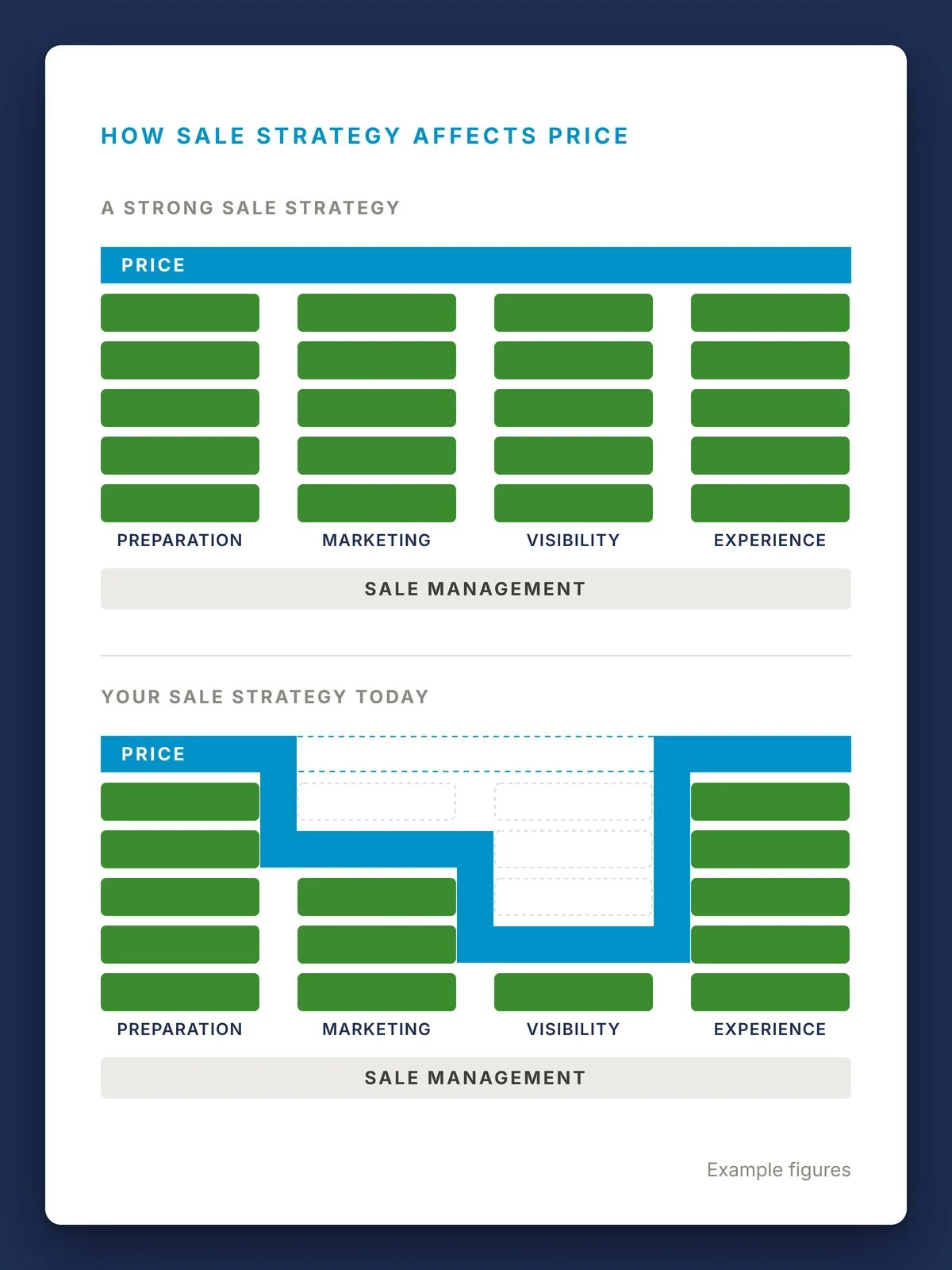
Price may be the problem. But it isn’t the only possibility.
The market sets the ceiling for what buyers are willing to pay for your property. But how close you get to that ceiling depends on how strong your sale strategy is.
A lower asking price can change where your property appears in searches, which homes buyers compare it with and how competitive it looks alongside them.
Sometimes that is exactly what’s needed.
But reducing the price won’t improve poor photographs or an unconvincing listing.
It won’t help if the right buyers aren’t finding the property.
And it won’t change what happens during viewings or how your agent handles enquiries, feedback, and offers.
If those parts of your sale strategy are weak, you could end up reducing your price to compensate for problems that could have been fixed.
So when a property isn’t selling as expected, the important question isn’t simply:
“How much should I reduce my price?”
It’s:
“What might be stopping this property from selling?”
That’s what the free Sale Health Check helps you explore.
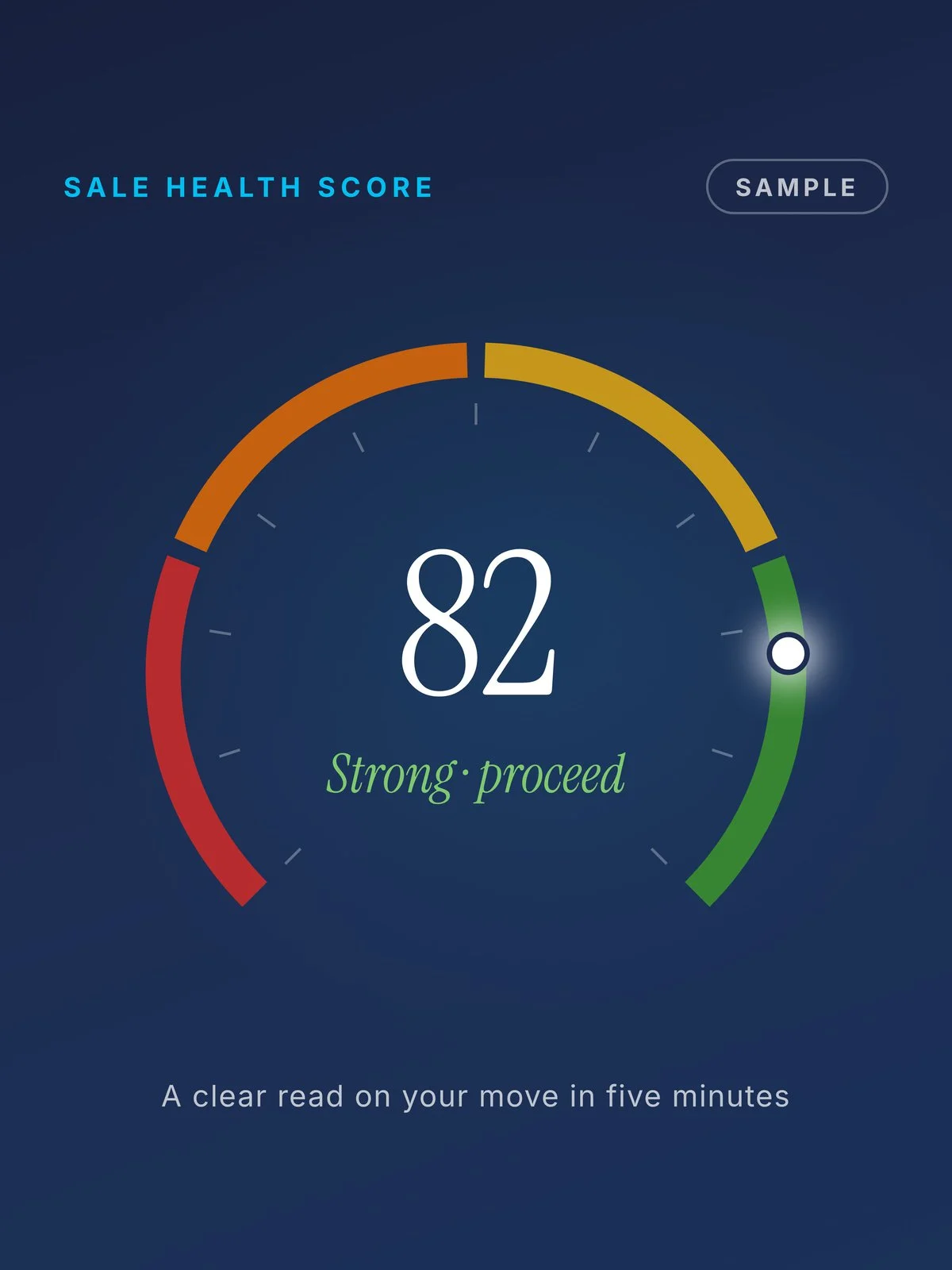
Take a quick look at the health of your sale.
The free Sale Health Check asks you a series of multiple-choice questions about the different parts of your sale.
You’ll look at:
your asking price
how your property has been prepared and presented
the marketing
whether the right buyers are finding it
what has happened during enquiries and viewings
how the sale has been managed so far
It won’t value your property.
And it won’t tell you what decision to make.
Instead, it helps you identify what's working well and what deserves a closer look.
A stalled sale can be difficult to diagnose.
After weeks on the market, it’s very easy to start second-guessing everything.
Is the price wrong?
Is the agent doing enough?
Is there something about the property putting buyers off?
Are the right buyers actually seeing it?
Or does the sale simply need more time?
The difficulty is that these things are connected.
Poor marketing may mean fewer enquiries.
Fewer enquiries mean fewer viewings.
A lack of viewings can then look like a pricing problem.
Equally, good marketing cannot compensate indefinitely for a price buyers won't pay.
That is why it helps to look at the sale as a whole before reacting to one symptom.
What will the Sale Health Check tell me?
It indicates which parts of your sale may be worth examining more closely.
You may find that price deserves attention.
You may find another area stands out.
Or several parts of the sale may be contributing to the problem.
The point isn’t to give you a definitive answer in a few minutes. It’s to help you stop looking at the sale as one big problem and start identifying where the specific problems may actually lie.
What won’t it do?
The Sale Health Check won’t:
✘ Value your property.
✘ Tell you what asking price to choose.
✘ Tell you whether to change estate agent.
✘ Give you specific property advice.
✘ Make the decision for you.
It is a starting point.
A simple way to step back, look at the different parts of your sale and decide where it may be worth investigating further.
Why Houz Hunter?
Jane Allen
Houz Hunter
Throughout the last twenty years, many sellers have come to me for a second opinion when a sale hasn’t gone according to plan.
Reducing the price is the blanket solution for many estate agents.
Price absolutely can be the problem. Sometimes a price adjustment is necessary. But six other variables influence whether a property sells, some of which require difficult conversations.
That’s precisely why running a diagnostic makes sense.
The Sale Health Check doesn’t tell you what to think. It helps you work out what deserves further investigation, so you can understand what’s happening and stay in control of your sale.
Houz Hunter may be new, but the experience behind it isn't.
You can read reviews elsewhere on this website from homeowners I previously worked with through my estate-agency business. Those reviews relate to my former estate-agency services rather than the Sale Health Check, but they can give you an indication of the experience and approach behind Houz Hunter.
Before you reduce your asking price, find out what you actually need to fix.
Zoopla found that sellers who reduced their asking price did so by an average of 7%.
On a £500,000 property, that’s £35,000.
The Sale Health Check is free.
It takes five minutes, and it gives you a chance to look at your sale differently before you commit to a potentially expensive decision.
The free Sale Health Check. Takes 5 minutes. Report available instantly. No credit card required